Thursday, April 14, 2011

Spring Cleaning


It doesn’t always look or feel like it but spring is coming to the mountains. One of the things that means is spring cleaning. Time to fire up the rigs that have been sitting all winter, hitch up the boat, and go police trash from the river. Sunday last Ben and I took on the upper section of the river below town, running from McConnell to Cinnabar. We went on foot through the access sites, including Brogan’s Landing and walked some of the other bank sections that get a lot of use.

Not being fools we also took an outfit to test the waters for fish in between the beer cans, odd flip flops, lost tennis ball and other detritus. Below are some of the fruits of our labors.

Wednesday, March 30, 2011

Graphic Caddis anyone?

My version of Barr's Graphic Caddis - I am tying a bunch of these in olive and tan, #14 and #16's for the shop. Pictured here is the olive version... I use pheasant after-shafts instead of ostrich herl for the collar. I think it's a better color and much more life like. I tie with lots of pheasant and save these aftershafts for this fly, scuds and my drake nymphs. Go try some as a dropper, they're killer!


Hook: MFCo. #7045 2x heavy scud #14
Bead: Black or Copper 3.0 mm, optional
Thread: Serafil 200 or uni 8/0
Rib: stretch magic in .5 mm/.019 in., wrapped over
Abdomen: tinsel Halo med., then colored with sharpie pen
Wing: olive grizzly “V” cut feather
Collar: after-shaft of pheasant, 3 turns on #14, 2 on #16.

Monday, March 21, 2011

New Podcast

I have finally gotten around to actually making a podcast that listeners can subscribe to.  It is hosted at Podomatic for now. We'll see how many subscribers we get and how much bandwidth we use to determine if we need to go with something fancier. This podcast will primarily include fishing tips and fishing reports for the Yellowstone area, but we'll talk about other trips we make, conservation concerns, etc. Please comment here or e-mail me to suggest topics you'd like to see us cover.

Sunday, March 20, 2011

Conservation issues at the MT legislature

As some of you know I have been active on conservation issues for a long time. That activism is primarily done as a member of the Northern Plains Resource Council and our local affiliate here in Gardiner, Bear Creek Council. This being a legislative year we have had plenty to do.

I want to lead off by joining the chorus of alarm swirling around HB-309 which redefines irrigation ditches in such as way as to potentially include many miles of main stem rivers and their side channels as ditches not subject to access under Montana’s stream access law. As I write this the Senate Agriculture Committee has not yet acted upon this bill so you should contact the committee and ask it to kill the bill. Find out how your Representative voted and contact your Senator for his position. If by some mischance it should end up passing the Senate in anything like its current form, demand the Governor veto it.

A second water bill to track and watch out for is HB-24. This bill opens the door to private ownership and marketing of water, probably not in the interest of anglers.

During the last election everybody in both parties was running on a “jobs” platform. Clearly the Republican majority in both houses of the legislature have a very different idea about which jobs are desirable and how to create them than do the Democrats. While the public media have spent a lot of time on the Republican efforts to gut the Montana Environmental Policy Act they have spent very little effort on their concerted attack on every sensible component of the state’s energy policy.

Just to be clear - I think developing clean, renewable energy sources creates jobs. I think a coherent policy promoting energy efficiency, both in public facilities and for private individuals and business creates jobs and is economically sensible. I think the current explosion of unrest in the Middle East and North Africa underscores the insanity of putting all our energy eggs in the fossil fuel basket. I would think that this should be so self evident that it transcends partisan politics. Evidently, not so.

What follows is a partial list of bills the legislature seems determined to pass that vitiate much of the progress made in the last few years.

SB-226 (Priest) Requires the addition of a “transmission” charge to the energy delivered to the grid by small generators using net metering. This makes installing your own photovoltaic or wind generators much less economical.

SB-330 (Walker) Allows utilities to duck out of meeting the Renewable Energy Portfolio Standard (RES) by simply declaring that its inconvenient. Poof goes the market for private renewable developers like the Judith Gap Wind Farm.

SB-109 (Barrett) Declares all the existing old hydro power can be used to meet the RES, another way to eliminate the market for renewable projects.

SB-104 (also Priest) Prohibits the Public Service Commission from using “inverted block rates.” An inverted block rate charges a consumer more for using more energy thus providing an incentive for efficiency.

SB-159 (probably Priest’s most perverse bill) Requires that building codes can not require an efficiency practice unless it totally pays for itself in 5 years. This completely ignores the facts that we don’t build for 5 years and that any one component of a design needs to be considered in relation to the rest of the design.

If you are a Montana citizen I urge you to take a few minutes to tell our governor to exercise that VETO brand he had made on these bills as well as a lot of the other stuff you have heard about. Find out how your Representative and Senator are voting on these bills and hold them accountable when next they ask for your vote.

Monday, January 17, 2011

New website!

Parks' Fly Shop now has a brand-new and super-snazzy site! Still at www.parksflyshop.com, but all other addresses have changed. Much of the information is the same, but some new things have been added, hatch charts and other fishing information have been updated, and the names and descriptions of our new flies for 2011 have been posted (still waiting on pics).

We're pushing private water trips much more for 2011, especially early and late in the year. The Paradise Valley spring creeks and private lakes in the area simply produce bigger fish and often more early in the season, and the lakes fish well all day in the fall, when the Yellowstone will only turn out an occasional pig in the AM but fishes well with dries in midafternoon at this time. Check the site for details, and let us know if you have any problems navigating it.

We'll be using the blog more this year, not least because I issued an ultimatum that other full-time staff (aka not Doug) had to help me with web stuff.

Wednesday, March 31, 2010

Yellowstone Park currently seeking comments on native trout restoration

Yellowstone National Park is currently seeking public comments on ways to restore/reestablish/protect native trout populations. Readers familiar with the park should submit concerns/suggestions. Here is the home address for the plan: http://parkplanning.nps.gov/projectHome.cfm?parkId=111&projectId=30504

Here's what I had to say:

As a fishing guide in Yellowstone National Park and longtime resident of a border community, I would like to offer the following suggestions and voice the following concerns over efforts to stabilize/restore/reintroduce native fish:

Comment/Suggestion 1:

Comment 1A: I believe a catch and kill requirement should be instituted in certain areas for rainbow trout. Likely locations where this requirement might prove effective at limiting cutthroat/rainbow hybridization are the Lamar River system upstream of the Soda Butte Creek confluence, Soda Butte Creek (possibly only above the Pebble Creek confluence), Slough Creek above the gorge dividing the Lower and First Meadows, and the Yellowstone River between the Lamar River confluence and the Lower Falls. A catch & kill regulation should likewise be put in place for brook trout in the upper Soda Butte Creek drainage.

Comment 1B: I believe catch and kill requirements would be counterproductive on other large rivers specifically including the Yellowstone downstream of the Lamar, the Gardner River, and portions of the Lamar drainage not noted above.

Comment 1C: The Yellowstone River below Knowles Falls and the Gardner River are particularly unsuited to catch & kill regulations, for two reasons. First, no barriers to fish movement exist or are feasible between these locations and waters of the Yellowstone drainage outside the Yellowstone boundaries, which are managed by the State of Montana and are unlikely ever to feature catch & kill regulations on rainbow trout. The second, related reason is that these locations already feature overwhelming numbers of non-native trout. A significant percentage of fish caught on the Yellowstone in this section are either rainbows or cutthroats exhibiting some degree of cutthroat/rainbow hybridization. The Gardner River is home to relatively low numbers of cutthroats, with rainbow and brown trout predominating. For these reasons, catch & kill regulations on these waters would result in lower fish densities for little gain in cutthroat population.

Comment 1D: I wish to state my categorical opposition to any catch & kill regulation on brown trout in the area discussed in Comment 1C. Indeed, in reality I would strongly prefer identical regulations on the lower Gardner River as exist currently in the Madison River drainage.

Comment 1E: If catch and kill regulations on rainbow trout are instituted, A considerable effort should be made to educate visiting anglers about the differences between rainbow and cutthroat trout, including placards containing color photos of both species at popular access points and/or more in-depth discussion in the regulations. Despite efforts in this direction in the current regulations, significant numbers of anglers still seem unable to tell the difference between rainbow trout and cutthroat trout and between cutthroat trout and brown trout.

Comment 2:

I would support a small additional license fee for anglers who wish to fish the Lamar River drainage, with this additional fee earmarked for lake trout removal or other cutthroat recovery efforts in the Yellowstone drainage above Upper Falls. The Lamar drainage has experienced significant angler crowding over the past several seasons due to the collapse of the upper Yellowstone fishery, which both reduces the overall experience for visiting anglers and contributes to fish stress. A recovery in the Yellowstone drainage would thus benefit the Lamar drainage, as well. If instituted, this additional fee could take the form of a "check box" on the regular licenses, which when checked for an additional fee of say $10 no matter the license duration would allow anglers to fish the Lamar drainage. I should note here that I do not believe closures anywhere in the Lamar drainage except perhaps short-term closures of some small spawning streams upstream of Cache Creek would be beneficial, as anglers impacted by such closures would only crowd other waters also likely home to cutthroat (i.e. the Yellowstone in the Grand and Black Canyons).

Comment 3:

If feasible, some headwater streams not historically home to cutthroat trout should be poisoned/shocked to remove current populations of non-native fish. Many headwater streams are likely unsuited to this due to the likelihood non-native fish would escape by hiding in seasonal tributaries, but some, specifically including Elk Creek and upper Tower Creek, might be suited to this process. Some streams in the Madison and Lewis/Snake drainages might also qualify, chiefly upper Sentinel Creek, Aster Creek, DeLacy Creek, Canyon Creek (Gibbon tributary), and Solfatara Creek.

Comment 4:

The current regulation allowing children to use worms as bait in the entire Gardner River should be modified to permit bait fishing above Osprey Falls ONLY. Above Osprey Falls no native fish are present and the water character is far more suited to child anglers both in terms of safety and in terms of likely angling success than below Osprey Falls. I have personally witnessed adult anglers below Osprey Falls managing tackle nominally under the control of their children and keeping large numbers of fall-run migratory brown trout which enjoy greater protections outside the Park. Given the increase in hooking mortality associated with bait fishing and the fact that the locations in the lower Gardner suitable for bait fishing (the slower, deeper pools) are also where cutthroat trout prefer to reside, coupled with the fact that this portion of the river is generally too rugged for small children to fish effectively, the use of worms in the lower Gardner is counterproductive.

Comment 5:

All tributaries to Yellowstone Lake and the Yellowstone River above the Upper Falls, with the exception of the Yellowstone River itself, should be permanently closed to angling. The inlet to Trout Lake, which currently opens on July 15, should likewise be closed permanently. These waters, in particular, are home primarily to spawning cutthroat trout and lack resident populations of catchable-sized fish, so closures would result in little loss of angling opportunities.

Comment 6:

With the exception of the adjustments noted in Comment 5, I wish to specifically note my belief that other changes to angling seasons/waters would prove unhelpful, likely only reducing revenues both for the Park fisheries program and for businesses dependent on anglers visiting the Park, i.e. fly shops and outfitters.

Comment 7:

A gradual sunset date for the use of felt-soled angling gear should be implemented, provided sufficient notice is given to allow vendors time to retool their inventories and visiting anglers time to purchase appropriate gear. I believe 3 years notice would be appropriate.

Comment 8:

Efforts to restore cutthroat populations via limited stocking programs should be explored. Stocking of the Yellowstone River above the Upper Falls and of some tributaries to the Yellowstone River or Yellowstone Lake, particularly Pelican Creek, might make sense. Transplantation of fluvial grayling (probably from the Big Hole River) to locations such as the Gibbon River might also be explored.

Comment 9:

Changes to current regulations governing tackle might also be explored. In particular, changing the current regulation allowing treble hooks would reduce fish mortality. A more appropriate regulation might govern the total number of hook POINTS allowed, with two being my preferred regulation. This would allow anglers to use either two flies each featuring a single point or a single fly with two hook points, or would allow lure anglers to fish either lures with one double-pointed hook (for example a treble hook with one point removed) or two single hooks (for example with two sets of treble hooks, with the trebles replaced by singles).

Comment 10:

Closures due to high water temperatures and/or low streamflows are sometimes warranted, but I believe the criteria under which closures are instituted should be clarified. During the summer of 2007, portions of the Yellowstone (above the Lamar) and Gardner (above Boiling River) rivers were closed at the same time as the Firehole River, despite water temperatures averaging 15-20 degrees colder.

Thank you for your time.

Walter Wiese

Head Guide

Parks' Fly Shop

Gardiner, MT

Saturday, December 26, 2009

Tying for 2010

We are now tying flies in ernest for the 2010 fly fishing season, so I thought I'd share one of the flies I've been tying with a little twist.

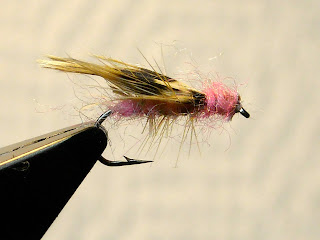
This is our "Korn's Spent Wing Caddis" a great fly and one of my favorites. I've been tying hundreds of them in tan and olive green. We fish it as a trailing fly tied about 12-18 inches behind a dry fly, like an X-Caddis or a hopper. But while I was tying all those flies I got thinking about last fishing season and how well we did catching fish on pink bodied hoppers. So the next thing I know I'm tying this variation.

Why not pink? Pictured is my prototype with pink body and head, I've named it the "Pink Cadillac Caddis". Think it will catch fish? I do, but then again, I might just be a little "spent" from spending too many hours at the tying bench!

I hope everyone had a great Christmas and is looking forward to the new year!


Friday, June 26, 2009

Trout Lake


The 15th of June is really when our "big fish drought" officially ends. There's Yellowstone Lake, with its monster cutthroat and chance at lake trout to help the cutts and fill the smoker, but the better bet is Trout Lake. There are a lot of 16-20 inch fish in this lake, and a few in the 24-30" class. In the 1980s an angler brought a 10lb rainbow he caught from Trout Lake into our shop to be weighed. He caught it using a Popeil Pocket Fisherman rod.

Okay, we'll be honest here. This blog entry is mostly an excuse for me to brag about the 24" rainbow I got from Trout on 6/25. It ate a #18 BLM nymph trailing a #14 Adams Parachute. The first run was 100 or more feet, way into the backing. That's it above.

We are running guide trips on Trout now. With the Gardner in great nymphing shape and Trout fishing well in the morning, combining these two makes a lot of sense for anglers who don't want to attempt the joke show down on the Firehole.

Friday, June 12, 2009

New pages about our custom flies, request for Youtube video suggestions.

Two items today. First, I've updated our Custom Flies page to have a photo and description of ALL of our currently-available custom and local fly patterns. Some of these are both tied and designed in-house, some are stock patterns we tie locally, and some are patterns we designed that have either been picked up by wholesaler Montana Fly Company or that we have MFC do since we struggle to keep up with demand.

Here's the main page: www.parksflyshop.com/flies.htm.

Here's the special page I made for our 2009 new patterns, both custom and "standards." We have A LOT of new flies this year, and I just gave Doug a new order for several beyond what we have pictured... and I have a lot of ideas percolating in my brain for when I finally finish the main fly order. www.parksflyshop.com/newflies.htm.

Finally, I have a request: please comment below on what sort of videos you'd like to see posted to the new Parksflyshop Youtube channel. I am planning to do some fly tying videos, videos of rising fish, videos of spawning trout, and of course promotional videos. What in particular would you like to see? Requests for particular flies to do full how-to videos for would certainly be welcome, based on the links above.

Sunday, May 24, 2009

Opening Day Reports

Here are four quick mini-reports from Yellowstone Park's openeing day.

Yellowstone River
Angler: Walter Wiese
Locations: Tower Falls area and upstream from the Roosevelt Bridge
Time: 11:15-4:45
Weather: 70 degrees, occasional hard wind gusts, partly-mostly cloudy
Water: 2 feet to 18" of visibility, tannin-stained, no more than 44 degrees and probably colder.

Well, I got one day of pre-runoff fishing in the lower Grand Canyon before it went away. The lake is rising like a rocket and it's been rainy, so this water is probably done until July 4 or so. Fishing was good, but not as good as I actually expected. I kept count and caught 30 fish at Tower, most on streamers and most of these on small black Sparkle Buggers. I probably could have caught more fish on nymphs, as the fish weren't in chasing mode. There were a lot of bugs in the air, but I only saw 5-6 rises total, which was disappointing. I was hoping for Mother's Day caddis. I just think the water (which was in Yellowstone Lake under an ice cap a day earlier) was too cold for the fish to rise. My second spot was between 1/4 and 1/2 mile upstream from the Roosevelt Bridge, where the canyon walls get tight. I only got one fish here, which I think is an artifact of the cold and very deep water. I expect this will fish better come Salmonfly time. The clarity was starting to drop while I fished.

Gardner River
Angler: Matt Minch
Locations: Several stretches below Boiling River
Water: Super high, six inches of visibility, around 48-52 degrees.

Matt figures he caught around 40 fish in this section, all on his double stonefly combination. The Golden Stone was actually the bigger producer, probably because the black one was too hard for the trout to distinguish from woody debris in the high flows. Most fish came from within a foot of the bank. Most tourists would have caught nothing, as the river is very difficult to fish at its current flows. The real upside here is that the fish seem to have filled in many of the lies vacated during last summer's gullywasher of sludge that significantly degraded habitat and thus fishing last summer/fall. A lot of the silt has been washed out already, and the river still has a good 750-1000cfs to rise before it peaks. This will add up to good fishing come July.

Firehole River
Two guys who were in the shop this AM joined the Firehole circus and said they did well on Pheasant Tails and other mayfly nymphs. They also mentioned some Nectopsyche caddis were in the air, although they saw no rises. Another guy did well on small olive buggers. I think the lesson is that the Firehole is fishing well, but only subsurface.

Joffe Lake
A pair of German tourists we sent there caught "a lot" of brookies on small spinners.

Wednesday, April 29, 2009

Signs of Spring

The other day somebody asked the inevitable question, “Ready for summer yet?” Well, in one sense yes, I think we are all getting just a little bit of cabin fever waiting for the snow to stop. On the other hand, that's the water we need to keep our streams in good shape come the dog days of August so I can’t feel too bad about it. My usual answer to this question is more along the lines of, “I’ll be ready for summer about Labor Day,” and there is some truth to that too.

There are some standard rituals though that tell me summer is coming, however reluctantly. Tax day. Put away the skies and snow shoes day. Restructure the display gondolas for summer stuff - T-shirts and such day. Periodic check in new inventory days. Oops, need to get an order into this vendor or that days. Earth Day events, not always on Earth Day, days.

This year Ben and I took a boat and participated in the Yellowstone River Clean Up day organized by Trout Unlimited Chapters to cover the river from Gardiner to Billings. Over all there were more than 200 volunteers out who collectively picked up several tons of trash. That's the good news and the bad news. Our segment was the right bank of the river from McConnell Access to Brogan’s Landing, about 5 miles, and we collected what looked like a boat load. The good news is that it really wasn’t as much as it has been in years past. I think that segment of river got the most use it has ever seen in 2008 yet I remember in the 1960’s we always carried a trash bag in the boat and always filled it every day. That trash bag may have been the Livingston TU Chapter’s very first conservation project, we got a couple of hundred onion bags screen printed with the TU logo and handed them out to cleanup volunteers all up and down the river. Woodsy Owl is slowly getting the message across.

Earth Day itself market another mile stone for Bear Creek Council, our local chapter of Northern Plains Resource Council as we participated in the commissioning of a solar power panel at the Gardiner school. This project was the result of a grant from Northwest Energy to the school which was facilitated by BCC. In addition we are putting up cash to fund a teacher’s development of curriculum around the solar panel for each grade level. Today Gardiner’s carbon footprint is just a little shallower.

Spring is promised to return next week. Richard 4/29/09

Tuesday, April 28, 2009

Streamers for the upcoming week.


Right now the weather outside is frightful (35 plus snow), but when it's not so nasty and the river has at least 18-24" of visibility, the streamer bite is on in a big way. This should remain true for the next week or so, shading into the Mother's Day Caddis and then the spring runoff.

Our go-to streamers are the usuals: Woolly Buggers in a variety of sizes and colors. Early in the day, try a PT-Bugger or another bugger with dumb bell eyes to make it ride upside-down, and fish it dead slow. Later, strip and rip. With the dirty water, the fish may well be in six inches of water tight to the banks, so don't hesitate to launch the bugs into cover.

Here are some more esoteric patterns to try now; save the Stacked Blonde for summer. We don't stock any of the patterns below, but if you would like to special order some, I could probably do some direct retail (aka not through the shop) --otherwise they're too time consuming to be worth doing commercially and they won't come cheap anyway.
Blogger is screwing with the pictures, so it's best to just post a link to the album: http://s557.photobucket.com/albums/ss16/Kesserendrel/Streamers%20April%2009/
Enjoy!

Tan EZ-Sculpin
Hook: 2xl nymph, #2.
Thread: 3/0 tan Uni.
Wing: gold variant standard rabbit strip, leave long as shank.
Body: golden brown flash chenille.
Gills: red Flashabou.
Head: tan EP streamer brush, trimmed into a wide/flat shape and with top colored with a brown Prismacolor marker.
Other Colors: olive, golden brown, black.


Articulated Chewbacca
Rear Hook: #4 Gamakatsu SP11-3L3H
Thread: 3/0 olive Uni.
Tail: copper Flashabou
Wing: gold variant or natural grizzly rabbit strip.
Body: olive speckled flash chenille.
Joint: 15lb nylon coated wire with three golden-olive 6/0 "E" glass beads.
Front Hook: #2 Gamakatsu SP11-3l3H
Wing: gold variant or natural grizzly rabbit strip.
Body: olive speckled flash chenille.
Legs: three metallic pumpkin Sili-legs on each side.
Head: two clumps of Australian possum, flared, divided by three turns of natural mallard flank.


Olive Circus Peanut
Rear Hook: #6 Gamakatsu SP11-3L3H
Thread: 6/0 olive Uni.
Tail: dark olive marabou with copper Flashabou.
Body: peacock Ice Chenille (or similar flashy chenille).
Hackle: grizzly dyed olive saddle.
Legs: 2-3 olive dun Sili-Legs on each side.
Joint: 15lb nylon coated wire and two golden olive or red 6/0 "E" glass beads.
Front Hook: #4 Gamakatsu SP11-3L3H
Eyes: 3/16" black Spirit River I-Balz.
Tail: olive Chickabou spun around the shank to cover joint, with 3 strands of copper Flashabou on each side.
Body: same as rear hook.
Hackle: same as rear hook.
Legs: same as rear hook.
Collar (optional): olive grizzly Schlappen.
Head: body chenille wrapped around eyes.
Other Colors: tan/natural (sculpin), black, white.


Black LaFontaine's Dropnose Minnow
Hook: Mustad 9672 #4
Bead: 3/16" copper, brass or tungsten.
Weight (optional): .025 tin wire.
Thread: 6/0 black Uni.
Tail: black Marabou and copper Flashabou.
Body: black Ice or other flash chenille.
Underwing: black bucktail (to support wing).
Overwing: black marabou, full, with copper Flashabou.
Head: peacock herl.
Hackle: grizzly wound dry fly style.
Other Colors: olive, white, brown over yellow, gray over white, chartreuse.


Olive Love Bunny
Rear Hook: #4-6 Dai-Riki #810 bass hook.
Thread: 3/0 olive.
Wing: olive variant rabbit strip.
Body: olive speckled flash chenille.
Joint: 15lb nylon coated wire and two translucent golden olive 6/0 "E" beads.
Front Hook: #2 Mustad 9671.
Eyes: Gold 3/16" Spirit River I-Balz.
Wing: olive variant rabbit strip.
Body: olive speckled flash chenille.
Hackle: olive dyed grizzly saddle.
Throat: red Flashabou.
Legs: barred olive Crazy or Sili-Legs.
Collar: olive dyed grizzly Schlappen.
Head: body chenille wrapped around eyes.
Other Colors: black, golden brown, white, gray and white, brown and yellow.


Sylvie Sculpin (variation; original lacks front hook)
Rear Hook: Dai Riki #810 bass hook #4.
Thread: black flat-waxed.
Wing: black rabbit strip (push point of front hook through and tie off on bottom of hook).
Body: black Angel Hair.
Joint: 35lb Power Pro braided line.
Front Hook: #2 Dai Riki #810.
Eyes: black Cyclops.
Throat: red holo Flashabou OR Angel Hair.
Head: black Polar-Aire spun in a dubbing loop, wound forward, and trimmed to shape. --OR-- black sculpin wool and black Polarfiber stack-tied and trimmed to shape. Head shape should be close to cylindrical.
Other Colors: olive, rust, white, natural.


Black Scleech
Stinger: #6 Dai-Riki #135 scud hook.
Joint/Body: 35lb Power Pro covered with eight translucent silver-lined black 6/0 "E" beads.
Front Hook: #4 Dai-Riki #810 bass hook.
Eyes: black 5/32" Spirit River I-Balz.
Wing: black rabbit strip, extending to point of stinger hook (push point of front hook through and tie off on bottom of hook).
Collar: two turns of rabbit used as wing.
Throat: red holo Flashabou.
Dorsal: black Widow's Web.
Head: black Widow's Web spun in a dubbing loop, wound forward, and trimmed to shape.
Other Colors: olive, white, brown and yellow, any "sculpin" combination.


Yellow Galloup's Stacked Blonde
Hook: #4 Mustad keel hook (hard to find, check http://www.fatbluegill.com/).
Thread: Uni Big Fly, yellow.
Body: 3-4 bunches of yellow bucktail and pearl Krystal Flash.
Throat: yellow marabou tied in along keel.
Head: thread coated with several layers of Sally Hansen Hard as Nails, with black lacquer dots for eyes.
Other Colors: black, olive, chartreuse, white, any traditional bucktail combination ("Mickey Finn" yellow-red-yellow would probably work for lake trout or, in small sizes, for brookies, for example).
See http://www.questoutdoors.net/skills/ftying/patterns/streamers/sb/ for instructions.

Sunday, April 19, 2009

Double Wing

Well, like Wally, I'm still tying flies too, right now it's my version of Gary Lafontaine's Double Wing pattern. 


Lafontaine’s Double Wing... tied Dougies’ way... with help from my friend Bill Pitts.


Materials List:

Hook - Mustad 9671 #12-14 dry fly. 

Thread - White 6/0 uni.

Tail - Antron or nylon yarn, ginger.

Tag - White thread cover 1/3rd of hook shank.

Rear Wing - Elk hair, apply super glue to butts.

Body - gray dubbing 1/3rd of hook shank, w/palmered grizzly hackle trimmed “^” on bottom.

Front Wing & Hackle - 1/3rd of hook shank, white craft foam measured to the bend of the hook, with coachman brown or ginger hackle.

Head: color thread w/brown sharpie then whip finish.


4/17/09:  I've also been doing some inland trout fishing here in NY for our local browns.  The Hendrickson hatch is on now and here is one example of the brown trout I caught even though the creek was crowded... could be that it was the nicest day of the year so far with temp's in the 60's that brought everybody to the stream. Anyway, I hope you get out there and wet a line too!


Friday, April 17, 2009

Float Report, Monday April 13


Richard, Don McCue, and I floated from Pine Creek to the 9th Street Bridge Monday. Fishing wasn't particularly fast, though not terrible, and we each boated at least one fish in the 17-19" class. Don and I fished streamers and got two in this range, while Richard fished using "his" method (read: dries) and got one. Half a dozen 12-15" fish and a couple small ones and whitefish rounded things out. We passed a couple foam patches early in the float with noses poking for Blue-winged Olives, although we didn't stop to switch to appropriate flies and so didn't get any on top. After noon the wind picked up hard out of the southwest (gusts to probably 40mph), and that was it for the risers.

Pictured is the longest fish, though probably not the heaviest. He ate a Black Circus Peanut.
We had heavy snow here in town two days ago. It is mostly melted, but the low-mid elevation snow from the system is sticking around. It's supposed to get into the mid-60s through Tuesday next week, and that's going to blow this out in a big hurry. By Thursday or so the river should clear and be red hot from then until the main runoff hits around the 10th.
Location: Yellowstone River, Pine-9.
Time: 11:00AM-5:30PM
Fish Landed: roughly 15, most trout.
Top Flies: #4+6 Black Circus Peanut, #2-4 Black Woolly Bugger, #10 Matt's Golden Stone, #12 Matt's Bead, Hare, and Copper.

Saturday, April 4, 2009

Beetlemania

Beetlemania officially begins April 5

Unfortunately, no rock and roll is in the offing. I just get to sit down to tie about 65 dozen foam beetles. We don't like how most commercial beetles look (they're too narrow and don't float right), so we tie our own. Beetles are the only class of fly we produce completely in-house. The somebody that does the producing is me.

One can get bored after a winter of commercial fly tying, and of course I save the stuff we don't need until midsummer until last. Earlier in the winter I was doing three dozen of this and five dozen of that, with only a few flies (some caddis for the Firehole, Glasshead PT Soft Hackles) breaking the 12 dozen barrier. I have to do at least ten dozen of everything I have left to do, with the exception of some streamers. Sigh.

1. Secure hook in vise.
2. Spiral thread to rear.
3. Secure foam strip 1.5X the gape to hook. Glue to shank.
4. Secure peacock or dub thread.
5. Wind body.
6. Secure foam strip at eye. Trim excess.
7. Add a narrow slip of foam as an indicator.
8. Whip finish and cement.
9. Repeat.
10. Repeat
11. Repeat
12. Repeat
13. Repeat.
.
..
...
645. Repeat

Tuesday, March 31, 2009

Dougie takes a break and goes fishing...

Hi, my name is Doug Korn, I'm a guide for PFS shop during the fishing season and tie flies for the shop during the winter back home here in New York.   Well the other day I had a chance to get out and fish for some of our local brown trout on Oatka Creek.  The creek was high and fast but I did manage to take some fine browns on one of Matt's #14 Bead Hare and Coppers that work so well out West... Well I guess they work here too!  

OK, funs over I gotta get back to work tying.... Dougie.

Sunday, March 29, 2009

Belated Trip Report: Yellowstone River, Tues March 24

I fished the Yellowstone Riverin the run below a tributary stream on Tuesday. Fishing was weird. The winter ice changed the configuration of the tributary mouth considerably, preventing the river from washing away some large ice shelves deposited all along the mouth of the creek and significantly altering the river at and below the mouth of the creek. Now there's a deep slot right at the creek mouth, and the run 25 yards downstream is a huge, slow eddy, with only a short run right at its top. In previous years, the best water was the run, with very limited fishing right at the mouth, where the river flowed fast, shallow, and without many boulders to create cover. In the middle of summer the mouth was great, since the river is up in the bushes and flows around boulders that are high and dry this time of year, but usually in March the water was just too fast for trout with relatively slow metabolisms to deal with, except when they hit the jets to climb the creek to spawn.

The spawners are why the area is good this time of year. The rainbows are itching to do the deed, and spawn in great numbers up in the creek. They have to steel themselves for the trip, however, so the fat, healthy, strong fish that aren't quite ready wait in the river in deep water, waiting for rain or warmer water or just the overwhelming urge to meet attractive trout of the opposite sex. Once they're in the creek they're safe, because the creeks are sensibly closed to protect them while they do their business. In the big river, they're concentrated even more than they would be due to the cold (which explains the cutts, browns, and whitefish in the same spot), but fishing for them won't hurt the spawn any because the fish aren't on redds yet. Indeed, some of the fish I caught were in six feet of water, not exactly your stereotypical spawning gravel.

Anyway, back to the fishing. It started off slow. Contract guide Don McCue was planning to fish with me but realized a prior committment after we were already parked at the access point, so he just came down to watch me catch a few, wearing ditch boots to wade through the snow and the (fragile and rotting) ice shelves. I had to disappoint him by catching nothing, first by fishing a streamer/dropper combo downstream from then on a Matt's Black Stone trailing a Bead, Hare, and Copper. Score after half an hour was one foul-hooked rainbow. Boo.

After Don left, I kept fishing the double nymph rig up to the mouth of the creek. The sun peaked out from the clouds, and in fifteen minutes I caught four fish, including the reason no pictures accompany this story: the best fish of the day, an 18" male cutt-bow hybrid, turned out to be camera shy and so flopped his tail against my lens right as I was preparing to snap a snazzy close-up shot. I had my good DSLR, not the cheap waterproof Pentax I could just dunk in the river to clean, so photos were out of the question. It took me twenty minutes after I got home to clean the slime off my lens. Jeez, fish. I promise I wasn't going to eat you.

I lost my flies a few casts after the nice bow, then tied on a Matt's Golden Stone above a new Rubberleg Hare and Copper, a pattern I did for the shop for the first time this year. The sun was as bright as it got during the two hours I fished, and the fished seemed to like the illusion of warmth it gave. That or the sparkle off the stonefly's abdomen and the Rubberleg's thorax. Long story short, in the eddy I was death from above on rainbows, cutts, and whitefish for about twenty minutes. I got some more nice fish, including two in the 15-17" range, and most of the trout were chunky and powerful. Then the clouds rolled in again, it started to fitfully flurry, and the switch was thrown. I think I got fish on back to back casts, then didn't get another strike in the next half hour, including another hopeful run up to the creek mouth where the fish hadn't seen the Golden Stone/Rubberleg combo. Nothing doing. By now it was late afternoon, the 38 degree water was starting to get to me, and I started hankering for a cup of hot tea followed by a beer. Such hankerings are not to be denied, so I headed home.

The facts:
Location: Yellowstone River, several miles downstream from Gardiner.
Time: 3:00-5:00PM.
Weather: 35-40 degrees, overcast to partly cloudy, occasional flurries.
Water temp: damn cold.
Water clarity: 3-4 feet in main flow of river, 4-5 feet before the creek water had time to mix.
Fish caught: 10-12 trout, from 8-18 inches, 4 whitefish from 8-12 inches.
Top flies: Matt's Golden Stone, Rubberleg Hare and Copper, Bead Hare and Copper. No known eats on the Matt's Black Stone or the Black Love Bunny.

Wednesday, March 25, 2009

Welcome!

Welcome to the Parks' Fly Shop blog! This blog is going to replace our awkward and seldom-used River Journal page. We hope it will be more user-friendly and intend to get all of our employees to post on occasion. Walter Wiese will soon be posting about his March 24 trip on the Yellowstone, so check back soon.